

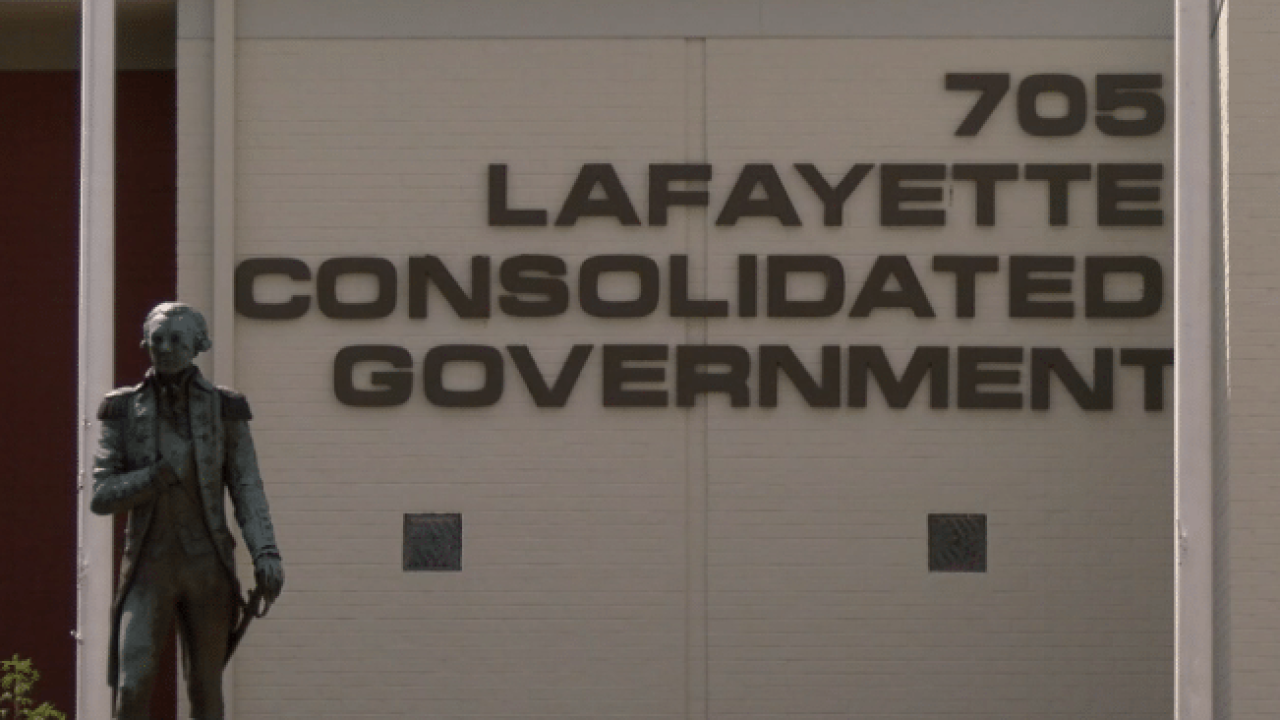

Lafayette Consolidated Government's annual audit is out, showing improvement again.
This year, there were four new findings and one that began back in 2022. To read the audit for yourself, scroll down.
Last year, we reported that, after two years of fiscal issues cited in audits, LCG had no major new findings in the audit. That didn't mean there were no findings; all but two of the findings listed in that audit started in previous years. And, that total number - 11 - was down from 18 in 2024, and more than two dozen in the year prior to that. To see our story about the 2024 audit, which looked at practices during the last year of the Guillory administration, click here. To look at the story about 2023 audit, click here.
Interestingly, the city-parish's auditor is Kolder, Slaven and Company, the same firm that the Lafayette Parish School System has criticized for its audit of school funds. The firm listed 77 findings, as well as a disclaimer, in their most recent audit of LPSS. To read about that, click here.
This year, the new findings in the LCG audit were:
Improper Use of Bond Proceeds for Non-Government-Owned Asset - two findings
Fiscal year finding initially occurred: 2025
In this finding, auditors report that more than $850,000 in proceeds from LCG public improvement sales tax bonds were used to make a grant to a non-profit to engineer, design and construct a building. The government doesn't have any title or ownership interest in the building - and that's a problem because the sales tax bonds were supposed to be used to fund government facialities, and "may result in noncompliance with bond covenants and applicable laws and regulations governing tax-exempt bonds and lead to misstatement of capital assets in the financial statements if improperly recorded," auditors wrote.
Auditors said that LCG "lacked adequate internal controls over the evaluation and approval of capital projects funded with bond proceeds. Management did not perform a legal or compliance review to ensure that ownership rights to the asset were established prior to expending bond funds," and suggested that "formal policies and procedures requiring legal and compliance review of all projects funded with bond proceeds prior to approval and ensure that bond-funded projects involve assets owned by the government or supported by legally enforceable agreements that clearly define rights, responsibilities, and public benefit."
Auditors also suggested that all existing bond-funded projects should be reviewed to make sure they were done properly.
LCG agreed with this finding, and noted that "the project and related grant agreements originated under the prior administration." They also agreed to review all current projects to make sure there are no other issues, and outlined a new procedure that has all projects in that fund reviewed for compliance.
LCG's bond counsel opined that reimbursing the fund fully would correct the situation, and so the council will be asked to fund that out of the City's General Fund.
Preparation of the Schedule of Expenditures of Federal Awards
Fiscal year finding initially occurred: 2025
In this finding, auditors report that LCG's Schedule of Expenditures of Federal Awards - which lists federal grants and funding and how it is spent - was not done properly, which resulted in multiple errors, omissions of federal expenditures and misstatements in reported expenditures. The grant documentations and award agreements weren't properly added to the general ledger, not added on time, or not reviewed, auditors reported. They recommended that LCG implement controls over the SEFA process to make sure all money is accounted for properly.
LCG agreed with this finding, and noted that it wasn't done properly during a time of "significant operational transition," including the implementation of a new system and staffing changes.
"During this time, management’s primary focus was to ensure the continuity of essential government operations and uninterrupted services to citizens, including procurement functions, vendor payments, and other critical deliverables. While these factors contributed to the control breakdown, management acknowledges that sufficient compensating controls were not in place to ensure the completeness and accuracy of the SEFA," LCG's response states.
The new system should help, and staff are being retrained to make sure things are done properly. LCG also is working on a comprehensive schedule of grant activities for supervisors and grant administrators to use to keep track of how funds are being used.
Reconciliations of General Leger Balance Sheet Accounts
Fiscal year finding initially occurred: 2025
In this finding, auditors report that LCG didn't maintain controls over balance sheet reconciliations: some weren't done on time, and some weren't done at all. As a result, entries had to be adjusted during the audit to ensure balances matched supporting documentation. The mistakes also weren't detected or corrected in a timely manner, and that could impact financial reporting, auditors wrote.
Auditors recommended that LCG implement policies and procedures to make sure balance sheets in significant accounts are reconciled monthly, reviewed and corrected if necessary.
LCG agreed with the finding, noting again the period of "significant operational transition" which "required substantial staff involvement and temporarily impacted the timely completion of certain internal control activities." They're implementing a new structure that will assign accounts to specific employees so that reconciliations are done on time.
Here's the fifth finding, which was a holdover from the previous adminstration:
Compliance with Sales Tax Dedications
Fiscal year finding initially occurred: 2022
In this finding, auditors report that LCG may not have complied with the purpose of two city sales tax dedications by using the income from those taxes for projects outside the city limits in fiscal years 2022 and 2023.
The total amount of dedicated sales taxes expended outside the City limits amounted to $5,854,757 broken down like this:
$1,575,459 for the St. Marin Parish Spoil Bank Removal Project
$791,212 for the Homewood/CIDC Detention Pond Project
$85,363 for the purchase of property in St. Martin Parish for the Spoil Bank Removal project
$3,000,000 for the Homewood/CIDC Detention Pond Project
$402,723 for a settlement awarded to lessors of property acquired for the Homewood/CIDC Detention Pond Project.
The auditors recommended that LCG get a legal opinion as to what the government should do about it.
LCG agreed with the finding sand said they're working with attorneys to determine what they should do, and also has hired an engineering firm to "analyze these projects for functionality and benefits."
The projects identified in this finding were all performed under the Josh Guillory administration and generated a great deal of controversy and lawsuits; Guillory was indicted in St. Martin Parish criminal court in connection with the spoil banks project. To read some of our stories about these projects, click here, here and here.
Both the executive and the legislative branches of LCG are taking credit for the improved audit.
Lafayette City Council Chair Kenneth P. Boudreaux said the Council has a "central" role in "establishing the framework for long-term fiscal discipline and accountability."
“Progress like this does not happen overnight, and it does not happen in isolation,” said Boudreaux, who also serves as Chair of both the City Council’s Governance Committee and Finance Committee. “It reflects a sustained effort to strengthen financial practices through oversight and accountability.”
Boudreaux said in his release that current Councils" have taken a more active posture in financial governance, including closer scrutiny of budgets, expenditures, and audit responses."
“There was a time when audit findings were higher, and there were shared concerns within the administration and among some members of the Councils that more could have been done sooner,” Boudreaux stated. “What we are seeing now is the result of a more engaged and deliberate approach.”
He added that the councils' "responsibility is not to manage departments, but to set the framework and hold the system accountable,” Boudreaux added. “When that responsibility is taken seriously, the results follow.”
Mayor-President Monique Boulet also issued a press release, stating that the report details "a year of significant financial strengthening and administrative discipline."
“This report is a testament to precision and transparency,” Boulet said. “Reducing findings from 29 to just 5 in three years proves that our focus on internal controls and legal credibility is working. We are no longer just correcting the past; we are securing Lafayette’s financial future.”
Here are the items she marks as highlights: Total audit findings decreased from 11 to 5, continuing a three-year downward trend in compliance issues; LCG successfully reduced its total debt by $93.1 million, including $61 million of bonded debt, while maintaining strong Aa2/AA credit ratings; Sales tax collections reached $122.9 million, a 7.1% increase that reflects a robust and expanding local economy; and the audit confirms over $1.8 billion in net capital assets, including major completions like the Louisiana Avenue Extension and upgrades to the Gloria Switch Water Treatment Plant.
“This is about more than numbers,” Boulet said. “It’s about ensuring public confidence through action. By cutting audit findings by more than half in a single year and strengthening our cash position, we’re delivering on our promise of a more professional, accountable government.”
Here's the audit:
