

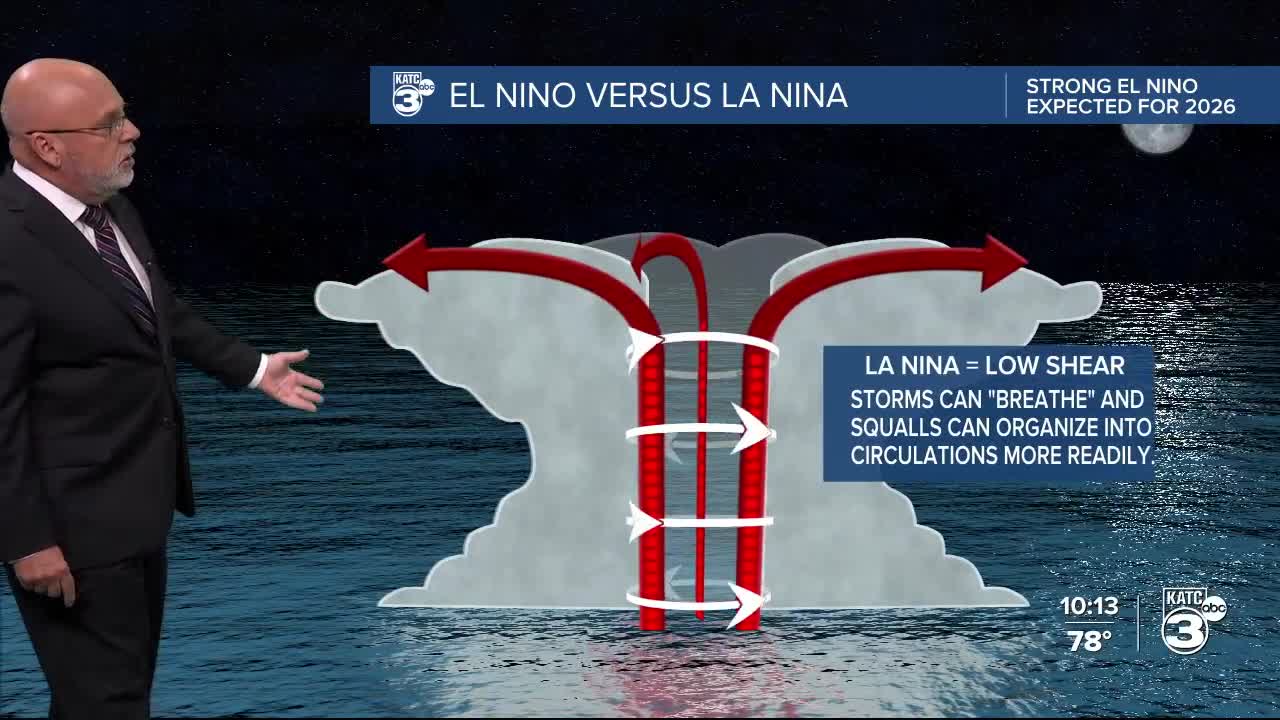


JUNE 1, 2026 — Today marks the beginning of the 2026 Atlantic Hurricane Season and while it's expected to be a below normal season across the Basin, it's important to prepare for each and every season equally, as it only takes one storm, in one location, to make it a bad year for some.

The forecasts from Colorado State (CSU) and NOAA are calling for a below average season compared with the 30 year normal, with CSU's forecast numbers expected to go lower in their June 10 seasonal forecast update.

It's been well-documented that a very strong El Niño is expected to establish by the peak of the season, which typically produces increased upper wind shear, inhibiting storm development and intensity, and lowering the number of total storms for the Atlantic season.

El Niños typically allow for more storminess (and tropical systems) in the Eastern Pacific, which in turns produces increased upper winds spanning from Mexico across portions of the Gulf, Caribbean, and parts of the Tropical Atlantic.
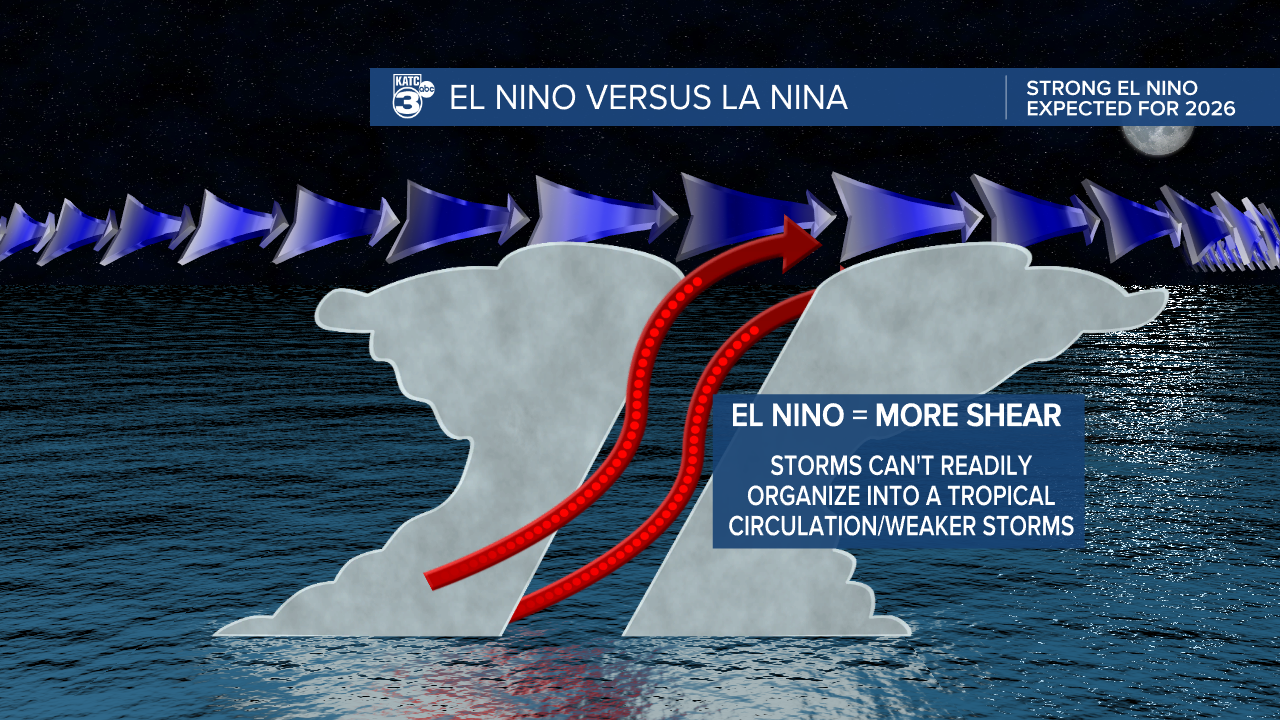
While these upper winds become a more persistent feature, they are not permanent, so in any given El Niño year there can be windows of opportunity (a week here or there) for development and intensification.

In addition, another factor for fewer storms than the last several years includes that the sea surface temperatures in the Main Development Region (MDR) of the Atlantic are near normal, and certainly cooler than the last few years.
While it's impossible to say with any confidence where storms may form and perhaps impact, and where the upper shear will be most prominent, it should be noted that for Louisiana, there have been big storms during El Niño years, including major hurricanes Betsy in 1965, Camille in 1969 and Andrew in 1992.
—————————————————————
Meanwhile, there are no major changes to this week's forecast with scattered showers and storms possible for Acadiana/South Louisiana each day through the next week.
See the KATC 10 Day forecast/radar page for the latest and Meteorologist Daniel Phillps' story for more details.
