

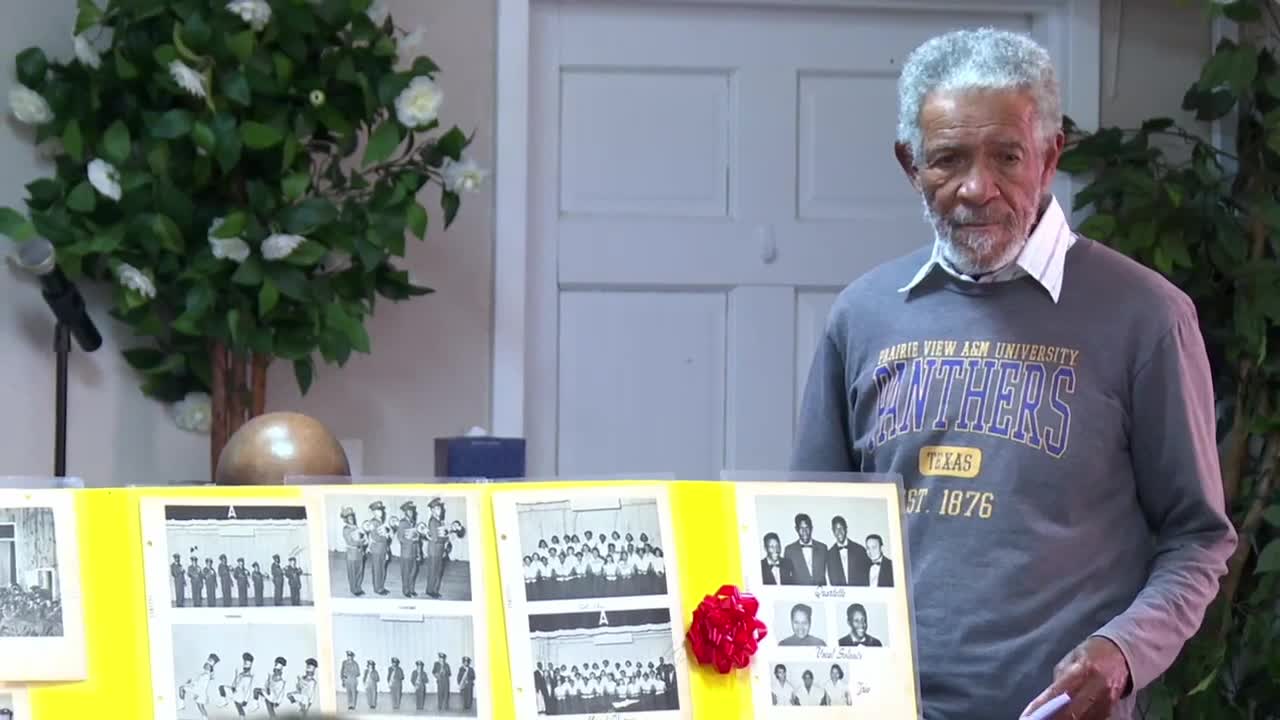


VERMILION PARISH (ABBEVILLE) — The legacy of the segregated South can be difficult to confront, but on Sunday afternoon at Greater Rose Hill Baptist Church, reflection gave way to celebration.
Alumni of James A. Herod High School, a formerly segregated school in Vermilion Parish, gathered to honor a pivotal moment in local Black education historythe expansion of the school to include high school grades nearly 70 years ago.
“We are commemorating the beginning, or the birth, of Black schools elevated to a 12th-grade level,” said event organizer and alumnus Denny Lapoint.
Before the late 1950s, the Abbeville school educated students only through the eighth grade.
Following federal legislation during the era of “separate but equal,” the school expanded its curriculum, offering new opportunities to Black students in the parish.
The school would later become integrated. For many attendees, the memories remain vivid.
Carlton Campbell, a member of the class of 1960, recalled a time when students from across Vermilion Parish were bused miles away to attend Herod.
“What I remember most is that kids from all over would get bused to Herod High School,” Campbell said. "Gueydan, Kaplan, Erath, Delcambre..."
“Some kids actually quit—they wouldn’t go to school" LaPoint said. "It’s almost like you’re recreating the slave trade, taking people from their roots and bringing them to a strange land.”
Though segregation ended decades ago, the emotional weight of that experience still resonates with former students.
At the same time, attendees emphasized the sense of pride and community that developed despite the limitations of the era.
Lapoint noted that the school provided opportunities that had previously been unavailable, including organized athletics, band programs and leadership development.
“It was the first to take kids and mold them to a much higher level,” he said. “You didn’t have that before.”
The gathering blended remembrance with celebration, as alumni shared stories of perseverance and achievement. Lapoint said events like Sunday’s are essential for preserving local history and honoring the progress made.
“We appreciate the culture,” he said. “Even though it was divided, it was a wonderful culture.”
He added that he hopes recognition of Black history extends beyond a single month and continues to be celebrated year-round.
