

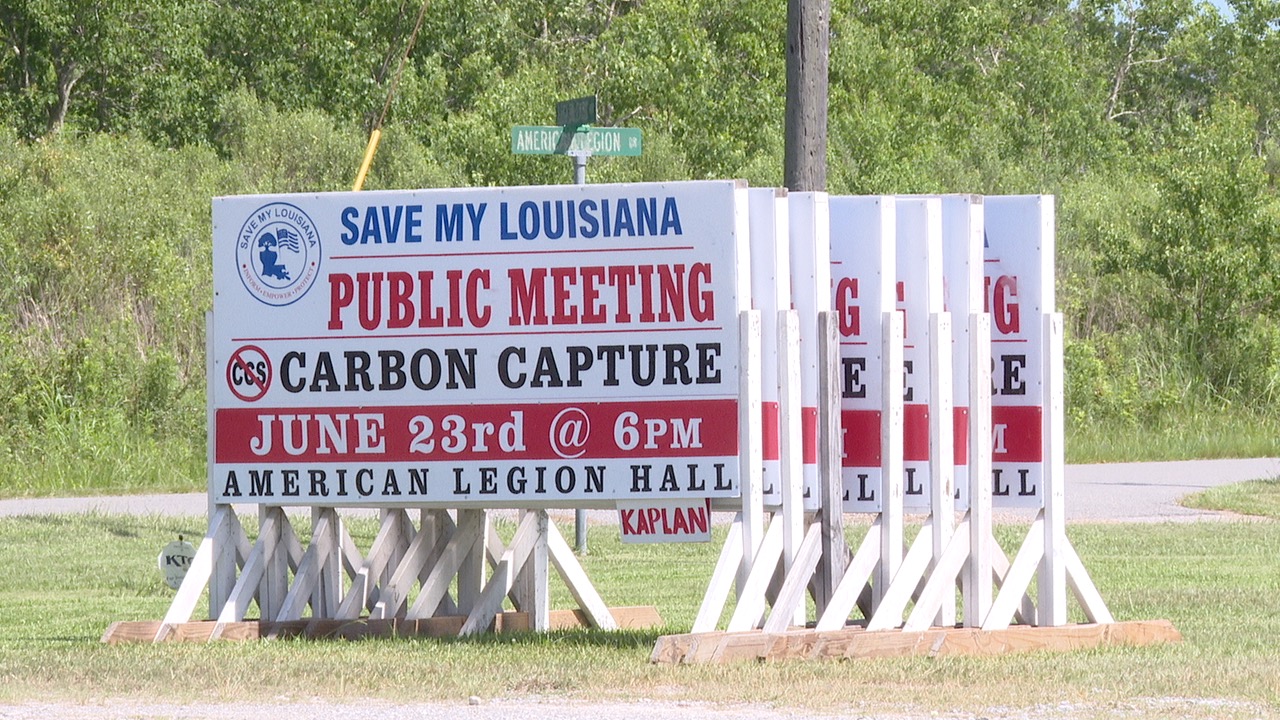


KAPLAN — Carbon capture has been an ongoing discussion for years, with many Louisiana residents strongly opposing it.
Geoscientist Brad LeBlanc said, “The CO2 was going to come into contact with some of these old wells that had no cement integrity behind the casing as the wells are apt to do, which they will degrade overtime, and that CO2 would use that well bore as a migration pathway back to the surface."
LeBlanc said companies are interested in storing carbon underground in Louisiana because of the state’s geology.
“We’ve been the dumping ground of sand for the greatest amount of time and that sand is very porous and permeable, so the people that were proponents of putting CO2 in the ground saw that has an opportunity to stick CO2 in large vast areas,” he said.
Legislation regarding carbon capture has been ongoing for years.
In May, a Louisiana House bill that would have given each parish the authority to hold a vote on carbon capture projects was rejected.
LeBlanc said the risks of storing CO2 in Louisiana are too high.
“What you won’t be able to see is if the Chicot aquifer becomes contaminated, and you begin drinking some of that toxic water that’s coming up," he said.
He said problems have occurred in other states that bury carbon.
“That underground gas blowout actually found its way to a school water fountain and so it was coming out the water fountain where they had to close down the school,” he said.
