

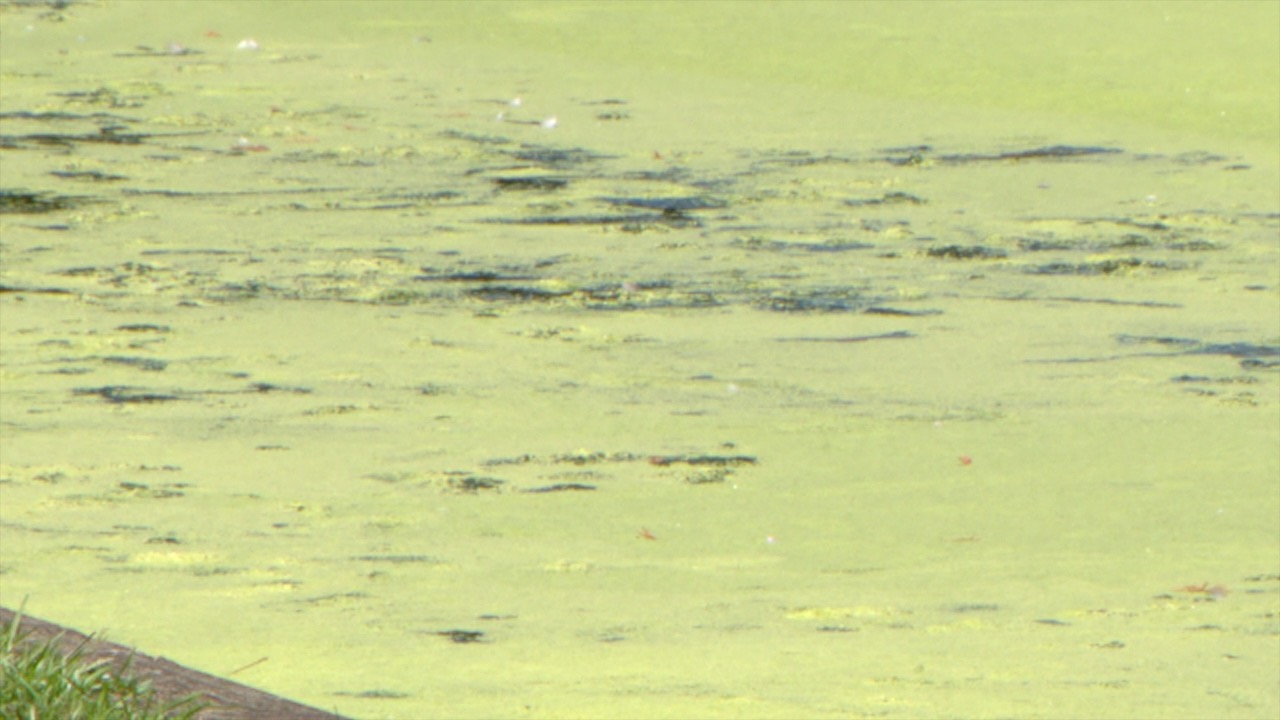


ABBEVILLE — Allen McLain Jr., a rice and crawfish farmer in Abbeville, is working with an LSU researcher, Naohiro Kato, to explore growing microalgae.
While saltwater from the Gulf can kill rice, microalgae thrives in saltwater. McLain says rice farmers could grow microalgae while still farming rice and crawfish.
McLain said, "It almost goes hand-in-hand, where you can still do your crawfish and rice, and then from there you can take a little acre, half acre, or something of that size and benefit you or help your bottom line."
Algae is found in waters everywhere, but they are learning how to grow the organisms naturally.
"We’re constantly collecting water from different areas, testing the water…seeing what algaes or micro organisms are in the water and then they’re…pulling out the organisms that they know they can separate and seeing if we could grow them naturally," he said.
The process is not fast, and they are still in their trial-and-error phase, McLain said.
"It’s not something that they came to us, it worked instantly, let’s go shebang, and it’s rolling. We knew it was going to be a timely process," he said.
The growth of microalgae provides benefits to various markets.
"The fibers can be used in different ways. I know Kato wants to try to do like a biodegradable Mardi Gras bead or medicine capsules that don’t have taste or flavor. It’s almost endless with the technologies that we can do with them," he said.
This story was reported on-air by a journalist and has been converted to this platform with the assistance of AI. Our editorial team verifies all reporting on all platforms for fairness and accuracy.
