

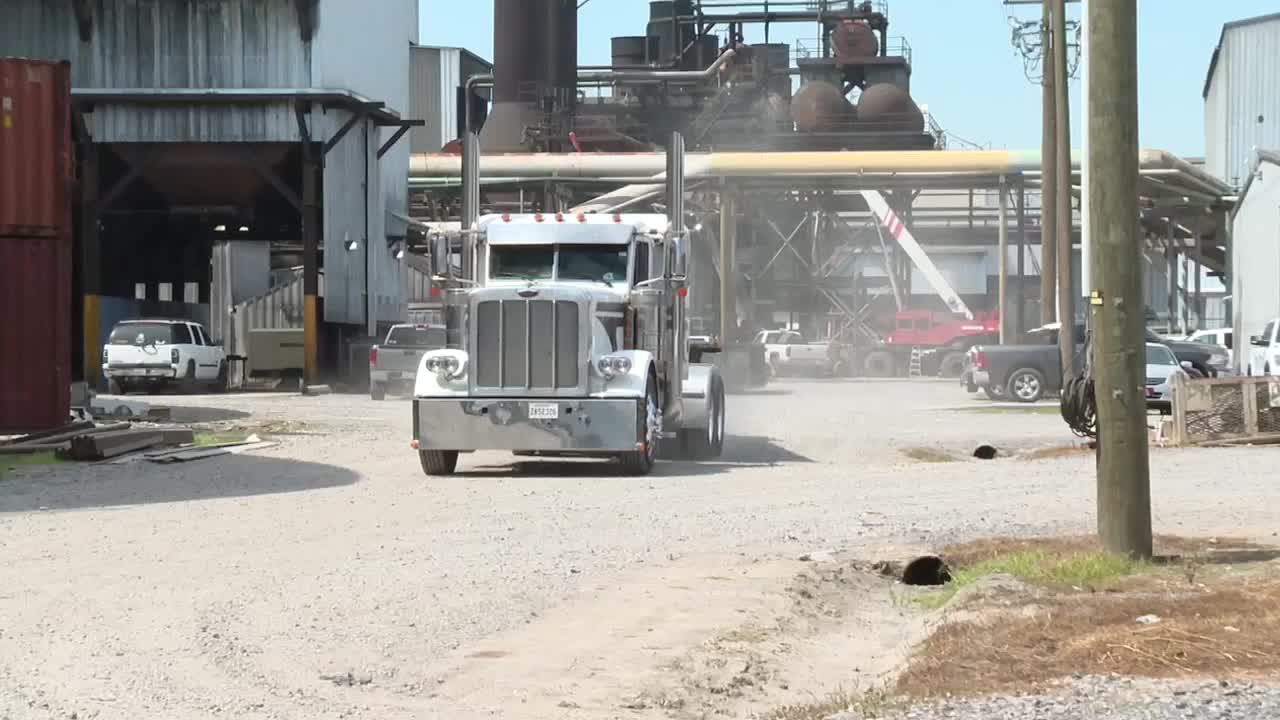


ST. MARTIN PARISH — The war in Iran is creating ripple effects across global markets, with local sugarcane farmers in St. Martin Parish now navigating rising costs tied to fuel and fertilizer.
At the LA SUCA processing plant, LSU AgCenter Assistant Extension Agent Paul Bongarzone said while global uncertainty is growing, domestic production has helped limit the impact on fertilizer supplies in the United States. “Thankfully, in the case of our sugarcane farmers and US farmers as a whole, about 65% of all of our fertilizer needs here in the U.S. as far as the three main fertilizer inputs; nitrogen, phosphorus, and potassium are handled domestically.”
Still, Bongarzone said the fertilizer market remains connected on a global scale. “the fertilizer markets in the world are globally integrated”.
That global connection becomes especially important when considering the resources needed to produce fertilizer. Bongarzone explained that natural gas plays a critical role in nitrogen production, which is essential for agriculture. “So you can see the trickle down impact of natural gas reserves being held by a country that is currently involved in a conflict in the way that it is and that resources being tremendously tied to nitrogen production; nitrogen being needed for everything surrounding us”.
Bongarzone, citing research from LSU AgCenter agricultural economist Michael Deliberto, said energy markets are also influencing what farmers are paying at the pump. “In 2024 about 20 percent of global liquid petroleum supply came from the gulf and we can assume there's a link there with the strait of Hormuz and so if we think of that supply coming through that region and all that’s going on with that region it’s not very difficult to make a link to what we’re all experiencing as far as these increases in fuel prices”.
While much of the United States’ fertilizer supply is produced domestically, Bongarzone said global disruptions can still shift demand and create challenges elsewhere. “International sources of fertilizer are less tied to the middle east, that being said, those other countries whose fertilizer needs are tied to those fertilizers and those goods coming through the strait of Hormuz will be negatively impacted”.
Back in St. Martin Parish, farmers continue their seasonal preparations, working to maintain productivity despite uncertainty in the market. “Any fields that may have been harvested for that final time, they are preparing those fields this spring to make sure that they will not have weed problems, all these fields get fertilized appropriately.”
As global conditions continue to evolve, Bongarzone said local producers remain focused on adapting to changes while keeping operations on track.
Bongarzone also provides regular updates on sugarcane and agricultural conditions, available here
This story was reported by a journalist and has been converted to this platform with the assistance of AI. Our editorial team verifies all reporting on all platforms for fairness and accuracy.
