

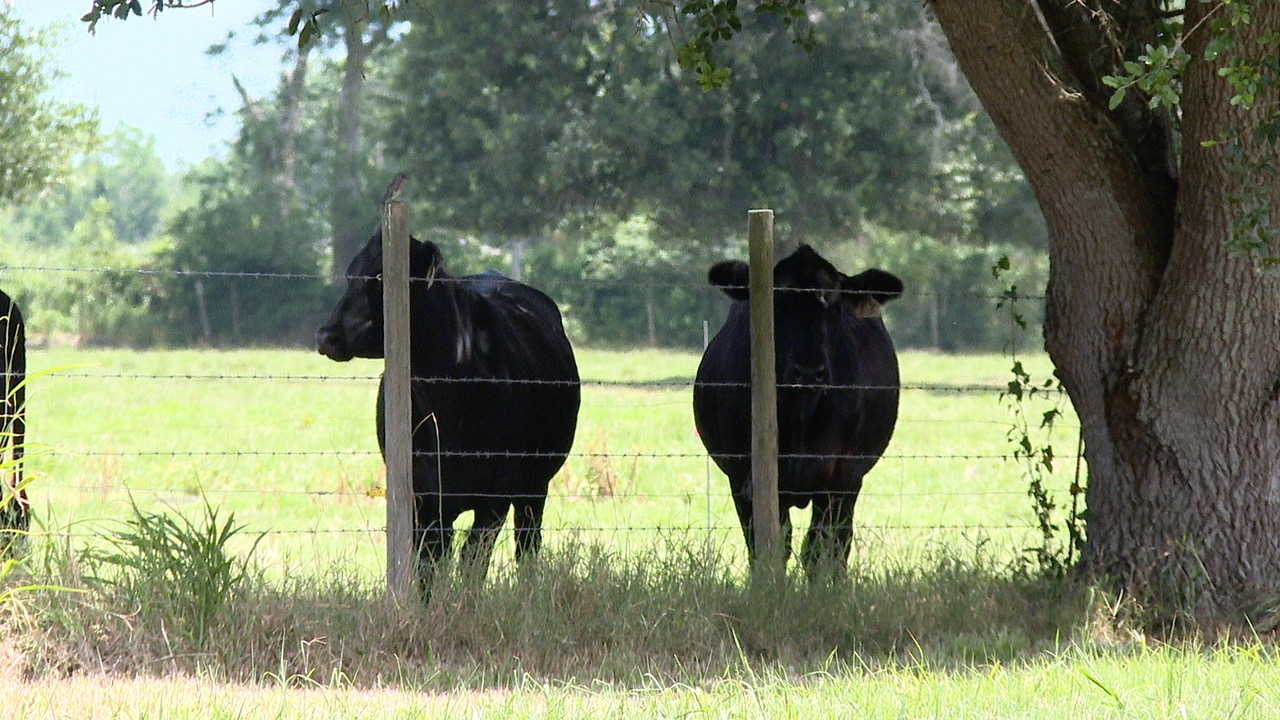


ST. MARTIN PARISH — As extreme summer heat settles across South Louisiana, cattle producers are doing more than making sure their herds have access to shade and fresh water. They are relying on months of preparation to help their animals withstand the hottest part of the year.
"It's brutal. I mean it's hard on people and it's hard on cattle," said Raymond Fontenot, owner and operator of Crescent Bar F., a grass-fed cattle operation in Meaux.
Fontenot said caring for cattle during the summer begins long before temperatures climb into the triple digits. Rather than reacting to each heat wave, he focuses on preparing his herd in advance.
"If you're just following the weather and not being proactive it's a tough deal. The cattle have to be fat going into the cycle to get through the cycle," Fontenot said.
A key part of that preparation is maintaining healthy forage—the grasses and other plants cattle graze on each day. Abigail Sartin, an LSU AgCenter extension agent, said weather conditions throughout the year play a major role in determining how well those pastures grow.
"We do a lot of soil testing prior to this time of year and rolling through the summer, trying to help people understand why maybe their grass wasn't as good this year as it was last year," Sartin said.
While walking through a pasture outside the LSU AgCenter office, Sartin explained that South Louisiana's changing weather patterns can make it difficult for forage to develop consistently.
"We had a period recently where we went a really long time without rainfall, but then we got a bunch of rain, so that impacts the grass's growth pattern; it can kind of confuse it almost," Sartin said.
Despite those challenges, Fontenot said taking advantage of favorable growing conditions throughout the year has allowed him to build a strong supply of forage while ensuring his cattle always have access to shade and fresh water. He said that preparation has helped his herd remain in good condition despite the recent stretch of extreme heat.
"So we're kinda going up and down, but in this situation we've still got good conditions for growth on the grass," Fontenot said.
Sartin encourages producers to continue monitoring pasture conditions throughout the summer and adjust their management practices as weather conditions change, while Fontenot said preparation remains one of the best tools for helping cattle safely navigate Louisiana's hottest months.
