



ST. MARTIN PARISH — As temperatures rise across Acadiana, mosquito activity is beginning to follow, but conditions in St. Martin Parish are not mirroring last year’s spike—at least not yet.
“Normally a good hard rain would flush her down and get her into those tributaries, but for right now in 2026, we have the high temperatures, we have high tides, we have the Teche and Vermilion River that’s increasing, but we don’t have the rainfall so that’s to be determined,” said Jessie Boudreaux, president of Cajun Mosquito Control.
Boudreaux said last year brought an unusually high number of positive mosquito pools in the parish—around 130 compared to the typical 10 to 15. This year, he said conditions have reset. St. Martin Parish is currently at a Level 1, and if drier weather continues, he expects it could remain a relatively low season.
Still, that could change quickly.
“Mosquitos are soon to follow with the heavy rainfall, so each year is predicated upon some type of disaster event or heavy rainfall event,” Boudreaux said.
Boudreaux’s team tracks mosquito populations and collects samples, identifying species early in the season in an effort to control them before they spread.
“It’s a surveillance based mosquito program, so you have to know the mosquito you’re dealing with in order to control her,” Boudreaux said.
Part of that process includes specialized CDC Gravid traps designed to target specific species known to carry disease. “This catches the southern house mosquito, so the southern house mosquito is the leading cause of West Nile virus in Louisiana,” Boudreaux said.
Beyond trapping, Boudreaux said early intervention at the larval stage is one of the most effective and cost-efficient ways to control mosquito populations “If you control these before they leave their water source, then you save a lot of money without having to disperse the insecticides from the back of a truck or a plane,” Boudreaux said.
While mosquito control crews continue monitoring and treating areas across the parish, Boudreaux said residents also play a key role in prevention.
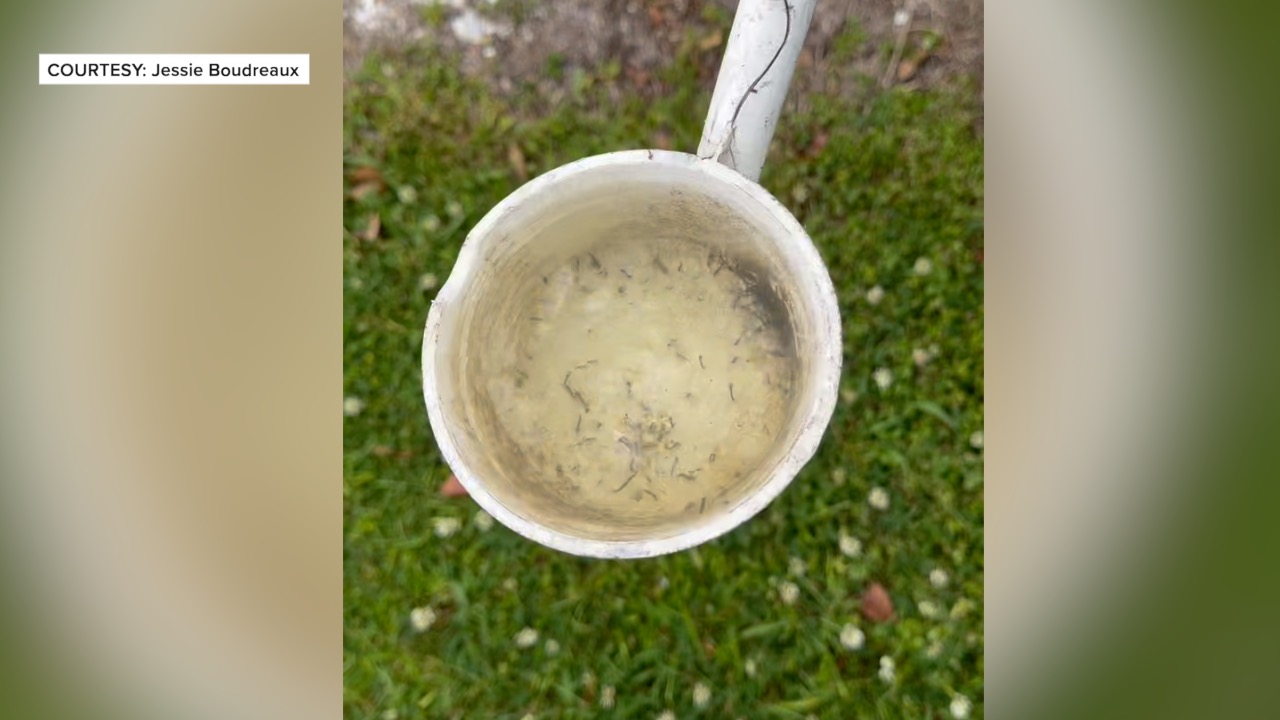
“Dump any standing water. It's very important, it could be a kid's pool, it can be a pet water bowl, it can be any container that holds water, you want to drain those on a weekly basis,” Boudreaux said.
Even small amounts of water can lead to rapid mosquito growth if left unchecked.
“One mosquito can have 400 eggs so if you have this many mosquitos that hatch off and they're unattended, just imagine what that does in a subdivision,” Boudreaux said.
As mosquito season gets underway, Boudreaux emphasized that staying proactive early—both through parish monitoring and individual action—can make a significant difference in limiting their impact in the months ahead.
This story was reported by a journalist and has been converted to this platform with the assistance of AI. Our editorial team verifies all reporting on all platforms for fairness and accuracy.
