



ST. LANDRY PARISH — The Louisiana Orphan Train Museum in Opelousas preserves a little-known chapter of American history while highlighting the personal stories that connect the past to the present. Board President Martha Aubert says the museum goes beyond a single person, “It’s not just my story being here, it’s the story of all the Louisiana orphan train riders.”
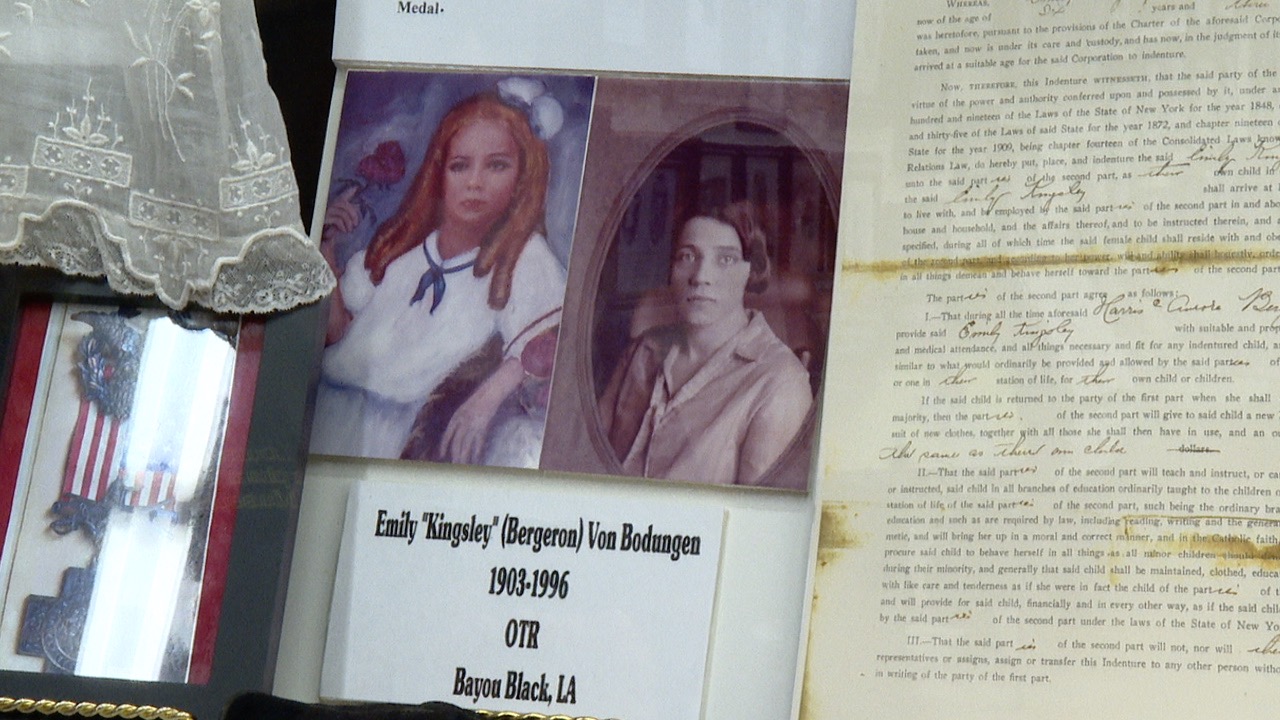
As visitors walk through the museum, Aubert often points to a display case dedicated to her own family history. Her grandmother was one of thousands of children sent south on the Orphan Train, a nationwide effort that relocated children from crowded orphanages in the Northeast to communities across the country, including Louisiana. “She was left at the New York Foundling orphanage in 1903 and was only three weeks old.”
Between the late 1800s and early 1900s, trains carried children to towns like Opelousas, where families could take them in. The museum, which opened in 2009, stands as one of only two Orphan Train museums in the United States, with the other located in Concordia, Kansas. The exhibits tell the stories of children who arrived with little more than their names and the hope of a new beginning.
Aubert’s connection to the Orphan Train began at home. She spent years living with her grandmother in New Orleans, where she learned firsthand how those early experiences shaped her family, “I’ll never forget it, and I think it made me who I am, so why not dedicate my time to passing this history” she says.
Years later, Aubert attended a presentation about the Orphan Train at LSUE, something she initially thought was a play. The presentation led her to meet the historian working to establish a museum in Opelousas. She joined the effort to help develop the museum while raising five children and continuing her career as a nurse, a profession she has worked in for nearly four decades.
Aubert says her work as a nurse taught her a skill she now brings into the museum as she helps visitors connect with the stories on the walls. “Everyday you have to talk to people and you have to listen to them,” she says. Aubert credits her upbringing in New Orleans with shaping her faith and guiding how she approaches the work of preserving these histories. “When good things come out of what you do, it might not be today, it might be five years from now — then you realize all the work and effort paid off.”
