

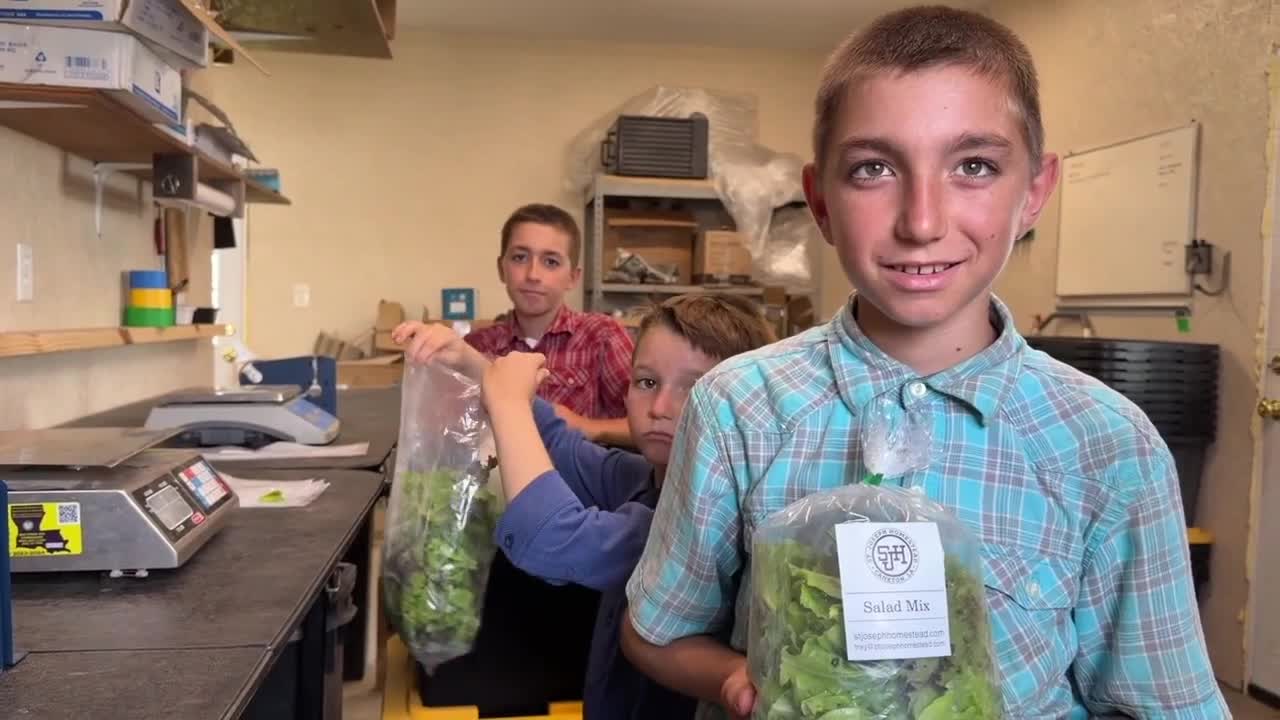


CANKTON, La. — As concerns over corporate produce safety grow, one local farmer says the answer may be as close as the end of the road.
Trey Johnson established St. Joseph Homestead in 2018. He describes the operation as a return to a simpler model of food production — one he says modern life has largely abandoned.
"A long time ago, everyone had a garden. Everyone grew fresh vegetables and just picked them right out of their yard. Today, modern life is a little too busy. People can't handle it," Johnson said.
Questions about corporate produce
Johnson said consumers who don't know where their food comes from often don't know how it was handled along the way.
"They could be spraying way too much pesticide to try to get the increased pest load under control in the summer. They could be using water from a source that is contaminated. They could be cutting corners on inspections and storage," he said.
Johnson said disillusionment with his previous career and concerns about corporate produce led him to start the homestead. He now describes himself as a personal gardener to his clients.
A family operation
St. Joseph Homestead is a full family operation. Johnson said he avoids chemicals and approaches feeding his customers the same way he feeds his own children. With a smaller operation, he said he is able to manage pests directly rather than relying on chemical treatments.
Johnson pointed to recurring produce recalls as evidence of systemic problems in large-scale agriculture.
"The recalls happen all the time. Every summer it seems like we have a recall on lettuce because of some stomach bug, and who knows where that really comes from. But the methods that Big Ag has to use almost guarantee that there's going to be health issues with the food," he said.
Scale as a safeguard
Johnson said keeping the operation small is central to maintaining the integrity of his product.
"I think it comes down to scale. On a much smaller scale, of course, we're producing way less, but we take our product directly to the market and get the full value of it rather than paying middlemen to do any processing, any transportation, any marketing," he said.
He said consumers should ask questions regardless of where their food comes from.
"I think local is important, but you still have to ask questions to the people who are growing your food. How do they produce it? What food safety measures are they taking?" Johnson said.
