

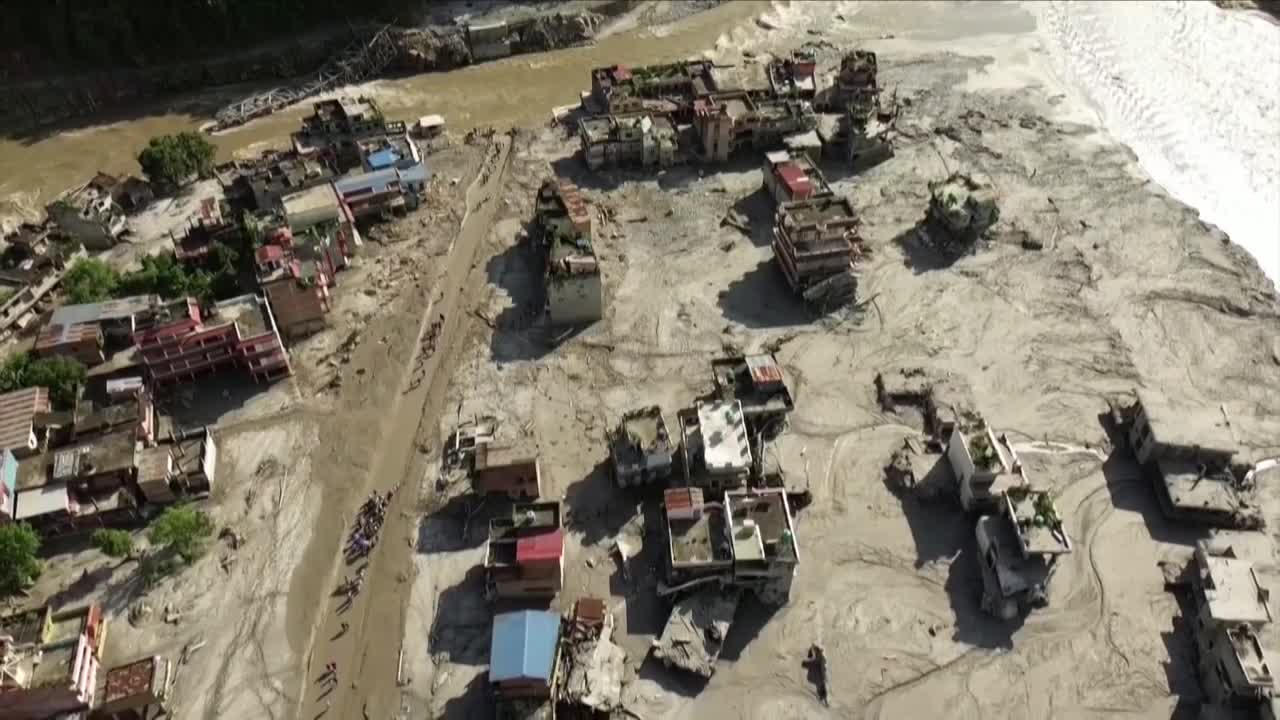


LAFAYETTE, La. — A University of Louisiana at Lafayette researcher is watching years of his climate change research play out in real time, as flooding devastates Nepal, the country he calls home.
"It's just beyond imagination, you know, we can't comprehend this kind of disaster," said Dr. Durga Poudel, professor emeritus and researcher at UL Lafayette.
Years of research, now underwater
Poudel has studied climate change and adaptation for several years. His research warned of the kind of flooding now occurring in Nepal. The site he studied for 15 years has been swept away by the flood.
"It is after 15 years, the same research site where we did is swept away by this flood. So I feel like, man, what is going on? I mean, all academicians and researchers, we work so hard and generate this information, and we do the prediction, but the translation of that knowledge from the responsible agencies and authorities is not happening," Poudel said.
Near his research site, 13 towns were affected, with an estimated 40,000 people impacted. Poudel said the feeling from watching the research site disappear is difficult to put into words.
Frustration over inaction
Poudel said the greater frustration is knowing warnings existed and were not acted on.
"The government, the ministry has not been able to pinpoint what exactly happened, at what time it happened, how this happened. They are so weak in that sense not to be able to understand and bring to the public. Very frustrating, in fact. The communities are frustrated. We are frustrated," Poudel said.
He said the loss was avoidable—that this flood is not the first, nor will it be the last, until science is turned into action.
"Scientific research has to turn into scientific policy. And then that will safeguard the society, and I don't see that loop happening there," Poudel said.
