

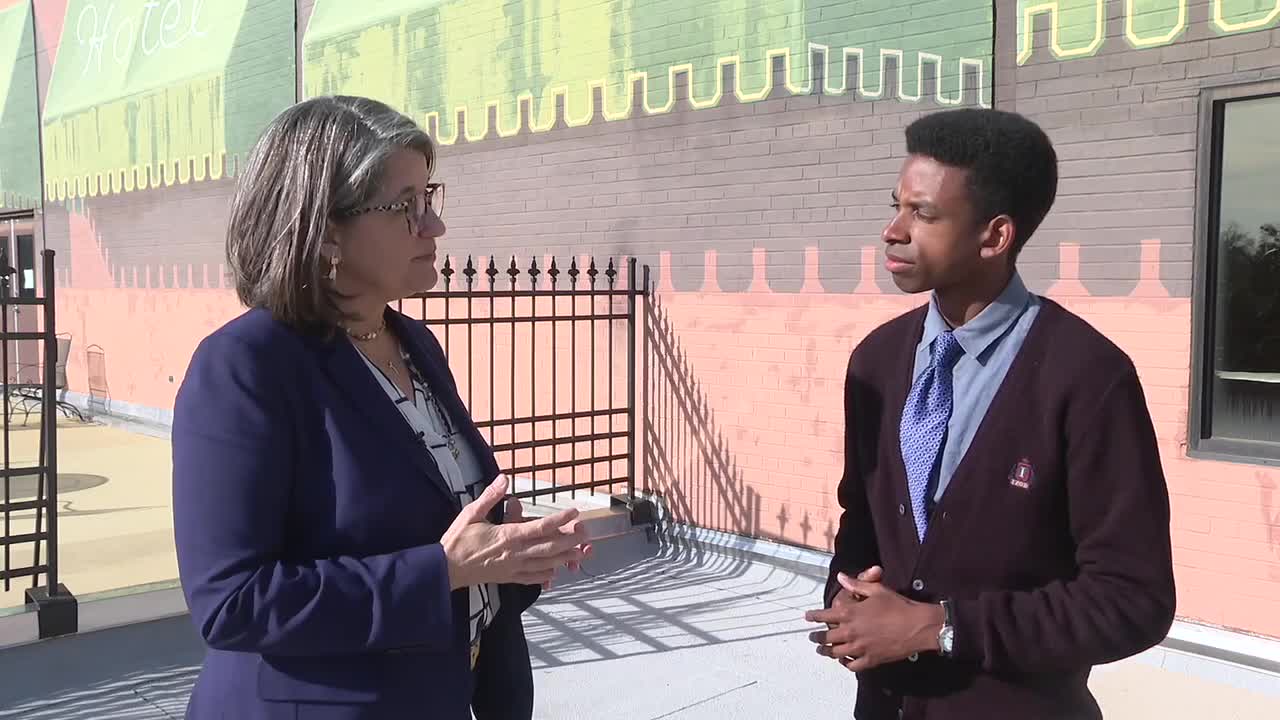


LAFAYETTE PARISH — Lafayette has been awarded $1 million through the Bloomberg Philanthropies Mayors Challenge, an international competition that drew more than 630 applications from cities around the world. Lafayette was selected as one of just 24 winners, placing it among a small group of municipalities recognized for innovative approaches to major public service challenges.
Mayor-President Monique B. Boulet said the funding is only the beginning of a much larger effort to address the city’s sewer capacity issues.
"Its starter money, it gets us in the position to actually set this program up to actually put something together that's executable that gets the community comfortable with."
Boulet said the $1 million is not designed to solve Lafayette’s sewer challenges overnight. Instead, she described it as a first step toward restructuring how the city manages stormwater infiltration and aging infrastructure.
"We process more rain water than we do wastewater in these big storms and that's when the system actually goes to capacity."
According to Boulet, fixing every leak citywide would cost an estimated $22 million. She said Lafayette is already investing heavily in wastewater capacity, including $17 million tied to improvements involving a lift station.
"Even the new lift stations with the big fancy pumps are not necessarily doing the job when we're in these very intense rainstorms."
During heavy rainfall, stormwater can seep into aging private sewer lines, overwhelming the public system and pushing it to capacity. Rather than continuing to rely primarily on costly lift stations, Boulet said the Bloomberg funding allows the city to rethink that model by addressing smaller leaks across the system.
"It's not going to go into new development, it's going to go probably into our oldest neighborhoods and some of our poorest neighborhoods; because that's where you have the oldest pipes."
Boulet said while repairs would occur on private property, the broader benefit would extend citywide by reducing strain on the public sewer system. She also emphasized that new developments will still be responsible for constructing their own infrastructure.
"Rebuilding the older infrastructure in the city benefits everybody and it becomes much more cost effective for the tax payer."
Boulet described the grant as the first step in improving sewer capacity and reducing the need for large-scale, single-site investments.
"What's next, how do we not have to line up another 17 million dollars for a single lift station for a single area of town but how do we fix the whole system."
The city will now move into the implementation phase of the program, focusing on building out the framework for targeted repairs as it works to address one of Lafayette’s most persistent infrastructure challenges.
This story was reported by a journalist and has been converted to this platform with the assistance of AI. Our editorial team verifies all reporting on all platforms for fairness and accuracy.
