

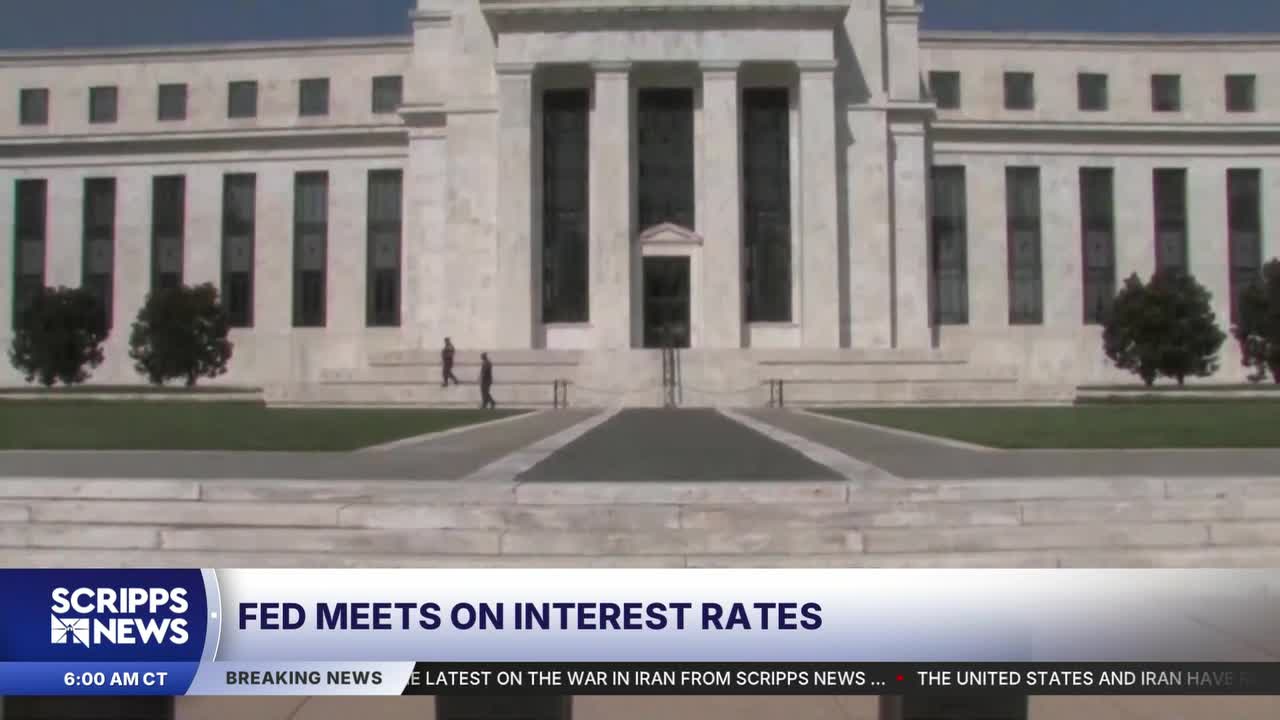


Ever since Kevin Warsh was nominated by President Trump in late January to lead the Federal Reserve, a question has lingered: Will he seek to raise interest rates to tame inflation or cut them as Trump has long demanded?
On Wednesday, Warsh may provide the first hints of an answer when he oversees his first Fed policy meeting as chair and holds a news conference afterward. Bond markets, which can swing sharply on a chair's pronouncements, will be watching particularly closely for any signs of which way he leans.
“We expect the press conference to be pivotal,” Jonathan Pingle, an economist at investment bank UBS, wrote in a note. “This will be Kevin Warsh’s first public appearance as Chair. ...We do not really know what his policy views are.”
RELATED STORY | Kevin Warsh sworn in as Fed chair, replacing Jerome Powell
Economists say Warsh will likely aim for a neutral approach, largely because he is taking over the Fed at a challenging time. Rising inflation has made it all but impossible for the Fed to cut interest rates anytime soon, which could stimulate growth and further raise prices. Hiring has improved noticeably since the beginning of the year, removing another key rationale for rate cuts. And the other 11 policymakers on the Fed's rate-setting committee — including Warsh's predecessor, former chair Jerome Powell — are split on whether an increase in the Fed's key rate will be needed or if it can stay unchanged.
High inflation puts Fed in tough spot
Oil prices have fallen sharply on news that the U.S. and Iran have reached an initial deal to end their war, which could eventually cool inflation. Yet it's unclear whether a permanent agreement can be reached.
“The right thing to do now is wait and see,” said William English, an economist at the Yale School of Management and a former top Fed economist.
Inflation has jumped to a three-year high of 4.2%, the government said last week, mostly because of higher gas prices. Even Trump has backed off a bit from his relentless demands for lower rates, and instead has argued that rate hikes — which the Fed undertakes to cool the economy and slow inflation -- aren't necessary.
In an interview earlier this month on NBC's “Meet the Press,” Trump said, “Kevin is fantastic and I want him to do whatever he wants," but added, “there's no reason to raise rates."
On Wednesday the Fed is widely expected to keep its key rate at about 3.6%, where it has remained since last December. When the Fed reduces its rate, over time it can lower other borrowing costs for things like mortgages, auto loans, and business loans.
Changes likely to dash hopes for those seeking lower rates
Still, some changes are expected, which will disappoint those hoping for lower borrowing costs: The Fed is likely to drop language that suggests its next move will be a rate cut, and instead adopt wording that is more neutral. Several Fed policymakers in recent weeks have said that the Fed's most likely next move is a hike, rather than a cut.
The central bank is also scheduled to release its quarterly economic projections on Wednesday, which include forecasts for how the Fed's key rate will change over the next three years. In March, those projections suggested the Fed would cut its rate once this year. Yet on Wednesday they will likely show no change in 2026, with maybe one or two cuts next year, economists say.
Warsh has criticized the projections for providing too much “forward guidance” to financial markets and leading Fed officials to stand by their forecasts for too long, even as the economy changes. Fed watchers will look closely to see if Warsh participates in the quarterly projections. If he doesn't submit his own forecasts, it could be a sign he will seek to get rid of them entirely in the coming months.
Warsh to bring a new approach to Fed leadership
Outside of policy, Warsh is expected to bring a different style to the Fed than Powell, people who've worked with him say. He wants Fed policymakers to give fewer speeches, have more debates behind closed doors, and will likely avoid commenting on the daily ups and downs of the economy. Powell was relatively plainspoken and straightforward, while Warsh has suggested he sees the famously oracular Alan Greenspan, the Fed's chair from 1987 to 2005, as a model.
“He's just going to say less, because he doesn't find that stuff very helpful," said Robert Tetlow, a former senior policy advisor at the Fed.
RELATED STORY | What will Kevin Warsh taking over at the Federal Reserve mean for consumers?
Randall Kroszner, an economist at the University of Chicago who served on the Fed's governing board from 2006 to 2009, when Warsh was also a governor, said the new chair would likely focus on bigger-picture questions, such as how AI will impact the economy. He will avoid thornier issues, such as whether tariffs raise inflation, which Powell was willing to address.
By avoiding such hot-button issues, the Fed could attract less negative attention from the White House, Kroszner said.
“He’s going to stay away from those,” Kroszner added. “If the Fed is to maintain its independence, it needs to maintain its focus.”
While seeking Trump's nomination, Warsh called for “regime change” at the Fed and criticized the central bank for not preventing the 2021-22 inflation surge, when prices jumped 9.1% in a year, the biggest spike in four decades.
Yet Kroszner said that Warsh will likely to seek to build consensus around changing things like the Fed's communications policies, rather than imposing them. So far, former Fed officials say he hasn't sought to fire top staff.
“He's not there to break things,” Kroszner said.
During his Senate confirmation hearing in April, Warsh said he would focus on quelling inflation.
“Inflation is a choice, and the Fed must take responsibility for it,” he said then.
If he acts on that sentiment by keeping rates unchanged — or even raising them — Trump could end up disappointed in another Fed chair. He often threatened to fire Powell, whom he also appointed, for not cutting rates deeply enough.
“There's at least a risk here that six months down the road, Trump is fulminating about how he didn’t get what he wanted from Warsh, and he'd like to fire Warsh,” English said.
. For inquiries regarding non-editorial uses,
