

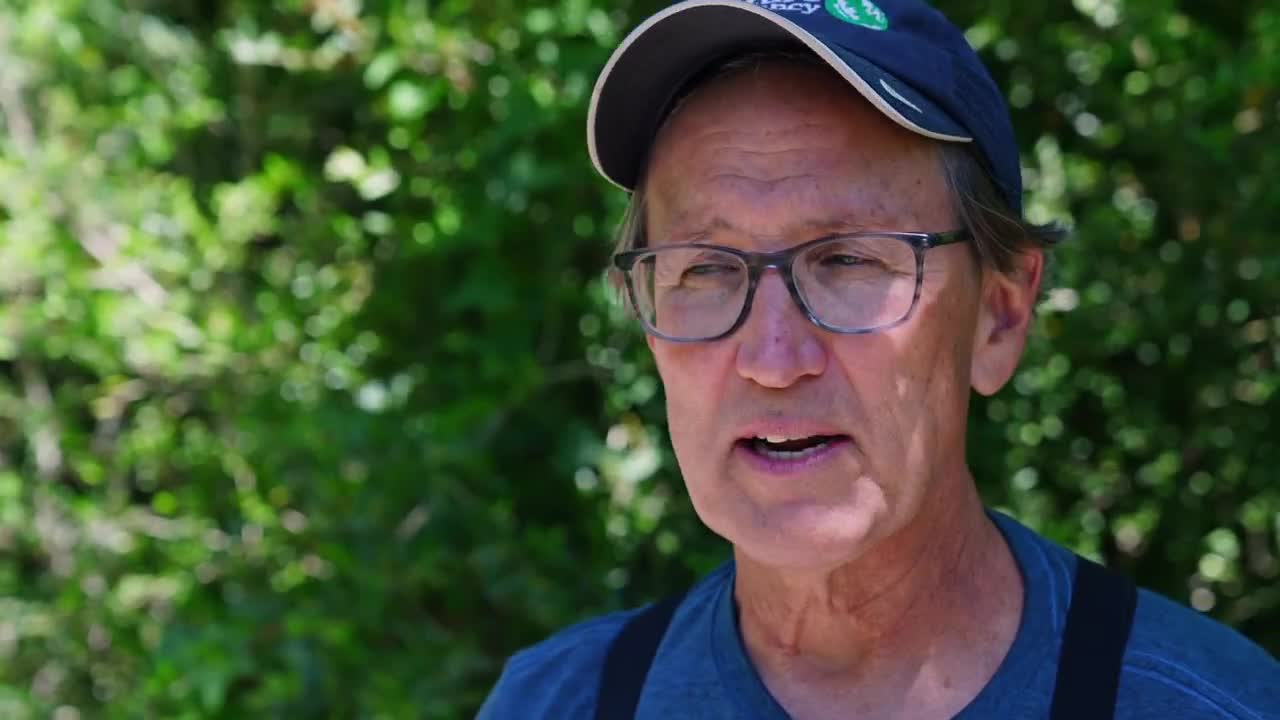

NEW IBERIA, La. — (WVUE) Forty years ago, Mike Richard was looking for a way to reduce the amount of groundwater being used at his family’s nursery near New Iberia. He converted a cattle pasture into a series of ponds.
“I needed an irrigation pond to treat the water for the nursery and to capture runoff, rainwater coming from the hillside,” Richard said.
He had a second goal in mind when he designed the ponds.
“I built islands on it because I wanted to have a habitat for the aquatic birds,” he said.
For 28 years, little activity followed — until one morning when Richard spotted something unexpected.
“I drove through the nursery and caught in the corner of my eye colors, white and pink,” he said. “Hurried over to see what it was and they had, I would say, roughly 5,000 wading birds.”
Overnight, the bird population in his man-made rookery had exploded just outside Rip Van Winkle Gardens, the historic home the Richard family also owns.
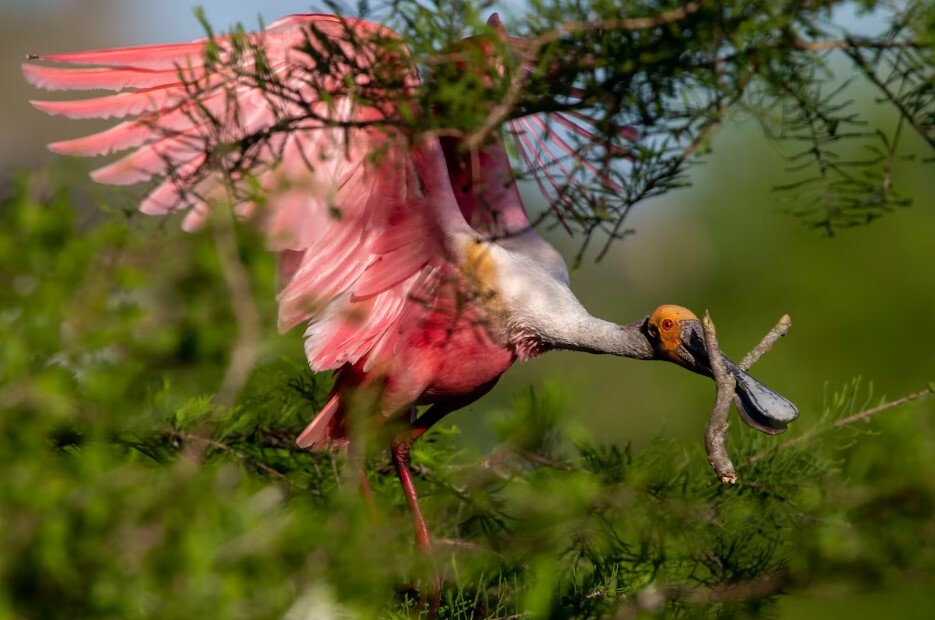
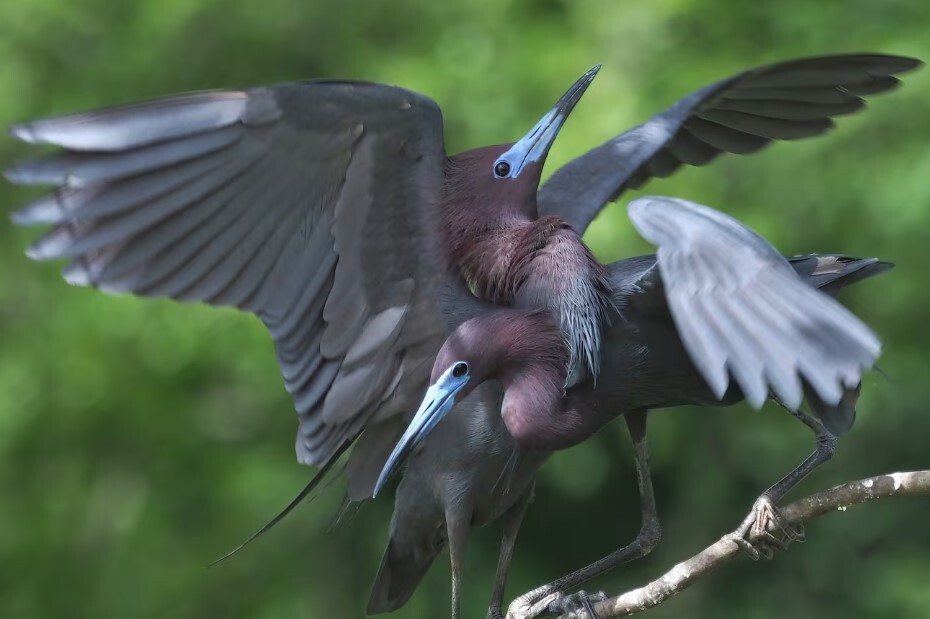
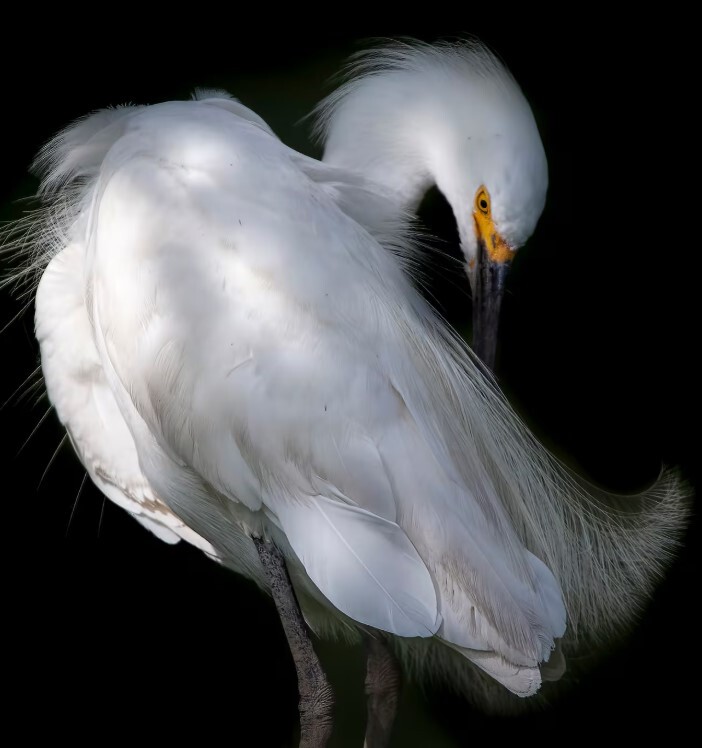
Today, “Rip’s Rookery” as Richard dubbed it, continues to draw colorful roseate spoonbills, egrets, and other species.
“This is part of the joy of having it is to have others be able to appreciate it,” Richard said.
Spoonbills’ history and range
More than a century ago, the roseate spoonbill nearly went extinct. Plume hunters targeted spoonbills, egrets, herons, and other birds to supply a 19th-century fashion demand for feathers on ladies’ hats.
“Spoonbills, if you see one, especially in the spring, have these really gaudy hot pink on nice pink on white. It was fashionable to use those colors on headgear and other stuff in the day,” said Seth Blitch, Director of Conservation for The Nature Conservancy in Louisiana.
Blitch, who grew up in Florida, said the birds were once rarely seen there.
“They were in terrible trouble there. You hardly ever saw roseate spoonbills in Florida,” he said.
The Lacey Act, a federal law passed in 1900, protected the birds. Today, the spoonbill appears to be expanding its range along Louisiana’s coast and in areas farther inland.
Broader bird decline
The story is not the same for bird populations overall. A 2019 study published in the journal Science found a decline of three billion birds in the United States since 1970 — nearly one in four. The authors cited habitat loss as a factor, with the highest losses in regions with high-intensity agriculture, where forests and grasslands have been converted to cropland with heavy fertilizer and pesticide use.
Blitch said Louisiana holds particular importance for migratory species.
“Louisiana is massively important for migrating birds and resident birds. We’re on the Mississippi Flyway, which is the largest flyway on the continent,” he said.
More than 325 different species travel that flyway, including birds which winter in the rainforests and tropical forests of Central and South America, areas Blitch said are being converted to other uses.
“There’s a lot of deforestation in the tropics. There’s a lot of conversion of forested areas or even grasslands for other uses, for other human uses. And when that habitat’s lost, birds just can’t be anywhere. Birds are specialized to specific habitats,” he said.
Coastal habitat and Louisiana investment
Blitch said specific stops along the Louisiana coast are critical for migratory birds, including Grand Isle, which often serves as a first stop for birds migrating across the Gulf of Mexico.
“It’s not an option for these birds,” Blitch said. “They must have these types of habitat to successfully complete their life cycle."
The loss of Louisiana’s cypress swamps also affects multiple species, including spoonbills.
“They like big cypress to nest in. So, when we lost a lot of those cypress like all species that depend on those cypress their numbers dwindled,” Blitch said.
Of particular concern for Louisiana, the population study found that more than one-third of all shorebirds have disappeared. The state of Louisiana has spent millions of dollars to restore habitat and nesting sites, including $19 million on Queen Bess Island near Grand Isle.
“Almost without exception, we’re seeing increases in nesting going on in Queen Bess. So, this certainly is an investment that’s paying off,” said Wildlife and Fisheries biologist Jon Wiebe.
Wiebe said brown pelicans normally imprint on the island where they were born and return to nest there.
“These birds are habitat-limited. So, what we’re seeing is birds that are coming in, certainly that were born on Queen Bess, but we’re also seeing birds that are coming in from different areas as those islands are eroding,” Wiebe said.
Adaptation and alligators
While many species adapt to changes brought on by human activity, Blitch points out that they require specific natural settings.
“I don’t know that there’s a way to predict that. I think relying and hoping that some species will just make it while we continue to change things is probably not a good approach,” he said.
Over the years, the number of birds at the Rip’s Rookery has declined. Richard believes the man-made habitat could not sustain the peak numbers.
Yet, the birds return here each year.
“Oh, very rewarding to think you created a habitat and it became part of nature,” Richard said. “It’s much greater than I ever anticipated, but very gratifying to see that it’s succeeded and it’s lasted.”
Copyright 2026 WVUE. All rights reserved.
